

Love in Action / Amor en acción
A Joint Reflection from the Rt. Rev. Paula E. Clark and the Rev. Canon Christopher Griffin
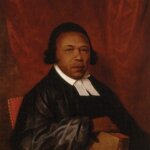
“We implore Thy blessing, O God, upon the president, and all who are in authority in the United States. Direct them by Thy wisdom, in all their deliberations… Amen.”
This prayer, offered more than 200 years ago by the Rev. Absalom Jones, reflects the intentions of his heart and remains strikingly relevant today. As we honor the Rev. Absalom Jones—whose Episcopal Feast Day is February 13—and the Rev. Dr. Pauli Murray—whose Episcopal Feast Day is July 1, we give thanks for their extraordinary witness.
In this reflection, the Rt. Rev. Paula E. Clark and the Rev. Canon Christopher Griffin offer brief meditations on these groundbreaking priests of our church, on whose shoulders we stand:
Jones and Murray’s faithfulness, tenacity, and willingness to endure racist, societal, and often church‑imposed oppression make them essential witnesses to the whole Episcopal Church. Their lives exemplify love and faith in action during some of the most challenging moments in our nation and in our denomination.
Absalom Jones: Faithfulness in the Face of Exclusion
We begin with the life and legacy of Absalom Jones, the first African American man ordained an Episcopal priest, in 1802. While living in Pennsylvania, Jones attended a Methodist Episcopal church that increasingly marginalized its African American parishioners—first forcing them to worship against a back wall, then relegating them to a balcony where they could not be seen by white congregants.
This demeaning treatment led Jones and others to walk out in protest.
Jones, together with his close friend and fellow abolitionist Richard Allen, founded the Free African Society, a mutual aid and social action organization supporting newly freed people. Allen later established the African Methodist Episcopal (AME) Church. Jones, encouraged by African American Episcopalians, pursued ordination and founded the historic St. Thomas African Episcopal Church.
Canon Griffin noted that it was “deeply moving to go to sit in the historic St. George’s Church in Philadelphia and go to the balcony where Absalom Jones and fellow Black worshippers were displaced while praying. “I was convicted by Absalom Jones’ witness and motivated to continue working towards building an anti-racist church.”
Today, many dioceses across the Episcopal Church continue to celebrate the Feast of Absalom Jones with gratitude and reverence.
 Pauli Murray: A Life of Justice, Vision, and Courage
 Pauli Murray: A Life of Justice, Vision, and Courage
One hundred seventy-five years after Jones’ ordination, we honor the first Black woman who was ordained in the Episcopal Church, the Rev. Dr. Pauli Murray. Ordained on January 8, 1977, Murray dedicated her life to causes of justice in all its forms. She was a poet, journalist, professor, civil rights pioneer, feminist activist, and an Episcopal priest.
Murray always tied the importance of jurisprudence in civil rights cases to the cause of women’s rights. Murray made clear that equal protection under the law cannot exclude women. Her brilliant analysis and belief in the justice of God were enunciated in countless memos, articles, briefs, books and poems, which were used as the foundations for life-changing legal arguments made by luminaries like Thurgood Marshall and Ruth Bader Ginsburg. Though she was often denied the platforms she deserved, her writing and witness profoundly influenced the public sphere.
Murray also challenged the Episcopal Church she loved. She questioned the absence of women in liturgy and leadership and became a powerful advocate for women’s ordination. Bishop Paula Clark recalls hearing a story from Murray’s time at General Seminary: when an African American seminarian criticized her for not joining a Black seminarian protest, Murray replied that she would participate “when she was allowed to be ordained to the priesthood.”
Nevertheless, Murray eventually saw vindication, and served as a priest at an Episcopal parish. She was remembered for “leading with love,” while standing on the firm foundation of justice for all. Reflecting on her body of activism, Murray wrote, “In not a single one of these little campaigns was I victorious. In other words, in each case, I personally failed, but I have lived to see the thesis upon which I was operating vindicated. And, what I very often say is that I’ve loved to see my lost causes found.”
A Legacy of Love in Action
Both Jones and Murray embodied love in action, for which we are all beneficiaries. As we continue to live into our baptism and build a house where all are welcomed, respected, valued and loved, Saints Absalom Jones and Pauli Murray have distinguished themselves among the “Great Cloud of Witnesses.”
All of humanity owes a debt of gratitude to Jones and Murray. As Christians, we aspire to follow their examples of grace, faith, and love—examples that continue to transform our Episcopal church, our nation, and our world.
Amor en acción
Una Reflexión conjunta de la Reverendísima Paula E Clark y el Reverendo Canónico Christopher Griffin
“Suplicamos tu bendición, oh Dios, al presidente, y todos los que tienen autoridad en Estados Unidos. Dirígelos por tu sabiduría, en todas sus deliberaciones… Amén.”
Esta oración, ofrecida hace más de 200 años por el reverendo Absalom Jones, refleja las intenciones de su corazón y sigue siendo sorprendentemente relevante hoy en día. Al honrar al Reverendo Absalom Jones—cuyo Día Episcopal es el 13 de Febrero—y al reverendo Dr. Pauli Murray—cuyo Día Episcopal es el 1 de Julio, damos gracias por su extraordinario testimonio.
En esta reflexión, la Reverendísima Paula E. Clark y el Reverendo Canónigo Christopher Griffin ofrecen breves meditaciones sobre estos sacerdotes pioneros de nuestra iglesia, sobre cuyos hombros nos apoyamos:
La fidelidad, tenacidad y disposición de Jones y Murray a soportar opresión racista, social y, a menudo, impuesta por la iglesia los convierten en testigos esenciales de toda la Iglesia Episcopal. Sus vidas ejemplifican el amor y la fe en acción durante algunos de los momentos más difíciles de nuestra nación y de nuestra denominación.
Absalom Jones: Fidelidad ante la exclusión
Comenzamos con la vida y el legado de Absalom Jones, el primer hombre afroamericano ordenado sacerdote Episcopal, en 1802. Mientras vivía en Pensilvania, Jones asistió a una iglesia Metodista Episcopal que marginaba cada vez más a sus feligreses afroamericanos, primero obligándolos a adorar contra una pared trasera y luego relegándolos a un balcón donde no podían ser vistos por los feligreses blancos.
Este trato denigrante llevó a Jones y a otros a abandonar como protesta.
Jones, junto con su amigo cercano y también abolicionista Richard Allen, fundó la Sociedad Africana Libre, una organización de ayuda mutua y acción social que apoyaba a los recién liberados. Posteriormente, Allen fundó la Iglesia Metodista Episcopal Africana (AME). Jones, animado por los episcopales afroamericanos, buscó la ordenación y fundó la histórica Iglesia Episcopal Africana de San Tomás.
El canónico Griffin señaló que fue “profundamente conmovedor ir a sentarse en la histórica iglesia de St. George en Filadelfia e ir al balcón donde Absalom Jones y otros fieles negros fueron desplazados mientras rezaban. Fui condenado por el testimonio de Absalom Jones y motivado para seguir trabajando en la construcción de una iglesia antirracista.”
Hoy en día, muchas diócesis de la Iglesia Episcopal continúan celebrando la Fiesta de Absalom Jones con gratitud y reverencia.
Pauli Murray: Una vida de Justicia, Visión y Coraje
Ciento setenta y cinco años después de la ordenación de Jones, honramos a la primera mujer negra ordenada en la Iglesia Episcopal, la Reverenda Dra. Pauli Murray. Ordenada el 8 de Enero de 1977, Murray dedicó su vida a las causas de justicia en todas sus formas. Fue poeta, periodista, profesora, pionera de los derechos civiles, activista feminista y sacerdote Episcopal.
Murray siempre vinculó la importancia de la jurisprudencia en los casos de derechos civiles con la causa de los derechos de las mujeres. Murray dejó claro que la igualdad de protección ante la ley no puede excluir a las mujeres. Su brillante análisis y creencia en la justicia de Dios se enunciaron en innumerables memorandos, artículos, breves, libros y poemas, que sirvieron de base para argumentos jurídicos que cambiaron vidas por luminarios como Thurgood Marshall y Ruth Bader Ginsburg. Aunque a menudo se le negaron las tribunas que merecía, sus escritos y testimonios influyeron profundamente en la esfera pública.
Murray también desafió a la Iglesia Episcopal que amaba. Puso en duda la ausencia de mujeres en la liturgia y el liderazgo y se convirtió en una poderosa defensora de la ordenación femenina. La obispa Paula Clark recuerda haber escuchado una historia de la época de Murray en el Seminario General: cuando un seminarista afroamericano la criticó por no unirse a una protesta de seminaristas negros, Murray respondió que participaría “cuando se le permitiera ser
ordenada sacerdote.”
Sin embargo, Murray finalmente vio la reivindicación y sirvió como sacerdote en una parroquia Episcopal. Fue recordada por “liderar con amor,” mientras se apoyaba en la firme base de la justicia para todos. Reflexionando sobre su cuerpo de activismo, Murray escribió: “En ninguna de estas pequeñas campañas fui victoriosa. En otras palabras, en cada caso, yo personalmente fracasé, pero he vivido para ver reivindicada la tesis sobre la que operaba. Y, lo que suelo decir es que me ha encantado ver encontrar mis causas perdidas.”
Un legado de amor en acción
Tanto Jones como Murray encarnaron el amor en acción, del cual todos somos beneficiarios. Mientras seguimos viviendo nuestro bautismo y construyendo una casa donde todos sean bienvenidos, respetados, valorados y amados, los santos Absalom Jones y Pauli Murray se han distinguido entre la “Gran Nube de Testigos.”
Toda la humanidad debe una deuda de gratitud a Jones y Murray. Como cristianos, aspiramos a seguir sus ejemplos de gracia, fe y amor—ejemplos que continúan transformando nuestra Iglesia Episcopal, nuestra nación y nuestro mundo.